Mastering Greedy Algorithms

Greedy algorithms are one of the most elegant problem-solving strategies in computer science. They are fast, intuitive, and often surprisingly effective—but only when applied to the right problems. This guide walks you through the recipe for designing greedy algorithms, the common proof techniques, and the classic patterns you must know. What Is a Greedy Algorithm? … Read full article: Mastering Greedy Algorithms
Floyd’s Cycle Detection Algorithm (Tortoise and Hare)

Floyd’s Cycle Detection Algorithm is a pointer algorithm that uses two pointers moving at different speeds to detect a cycle in a sequence of values, typically in a linked list. It is one of the most elegant solutions to the cycle detection problem and operates with O(n) time and O(1) space complexity. This technique was … Read full article: Floyd’s Cycle Detection Algorithm (Tortoise and Hare)

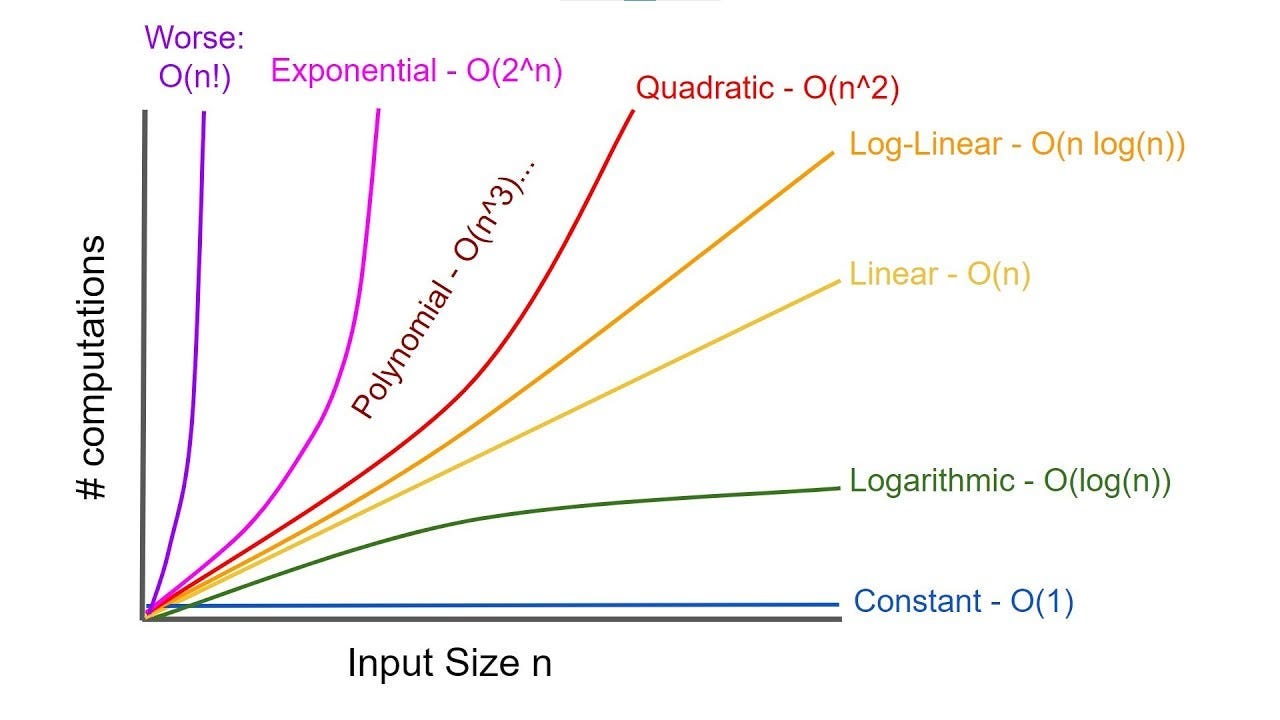
Understanding Time Complexity: A Key to Efficient Algorithms

time complexity

One of the most important concepts when designing and analyzing algorithms is time complexity. It measures the amount of time an algorithm takes to run relative to the size of its input. Time complexity helps us predict how an algorithm will scale and perform as the input grows, which is crucial when working with large … Read full article: Understanding Time Complexity: A Key to Efficient Algorithms