SQL Query Optimization

SQL Query Optimization

SQL query optimization is essential to ensure your database applications run smoothly and efficiently, especially as data grows. Optimized SQL queries can significantly improve response times, reduce server load, and enhance the user experience. This guide provides a step-by-step approach to optimizing SQL queries, covering best practices, tips, and strategies to make your queries faster … Read more

Optimizing SQL Queries with the EXPLAIN Statement

SQL Explain

The EXPLAIN statement in SQL is a powerful diagnostic tool that helps you understand and optimize your database queries, especially in relational databases like MySQL. By using EXPLAIN, you can see how your queries interact with your tables, which indexes are used, and the estimated costs of each operation. Understanding the output of EXPLAIN is … Read more

SQL ACID Properties

ACID

ACID stands for Atomicity, Consistency, Isolation, and Durability. Together, these principles define how transactions behave and help prevent data corruption, even when issues like hardware failures, power outages, or concurrent data access arise. Let’s break down each of these properties to understand their significance in SQL transactions. What is a Database Transaction? Before diving into … Read more

Navigating Git: Insights for Tech Professionals

git

Git is a powerful, distributed version control system widely used in software development. It allows multiple developers to work on a project simultaneously while maintaining a history of all changes made to the codebase. Git offers features like branching, merging, and stashing, which enhance collaboration and flexibility. Understanding Git is crucial for modern software development, … Read more

Choosing Between Git Rebase and Merge

Branching in git

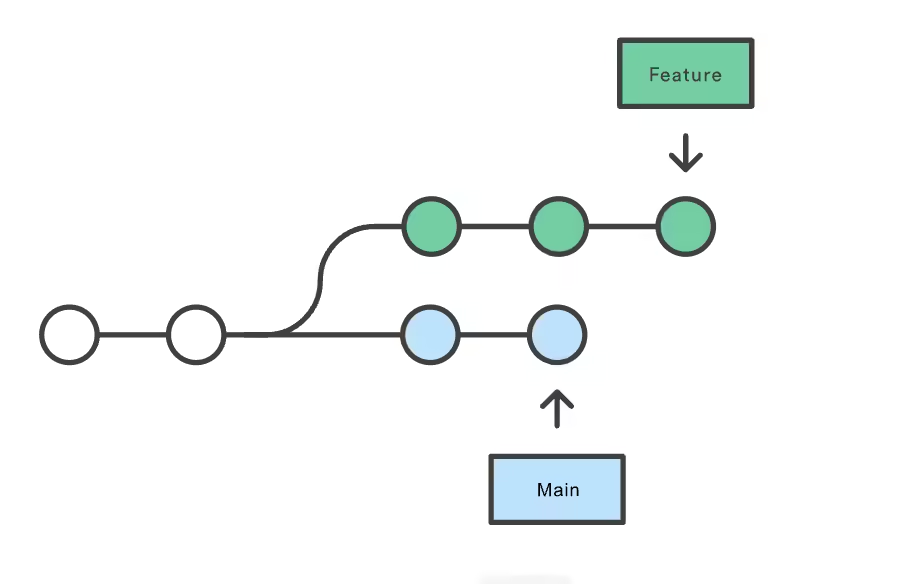
Git Rebase and git merge are two common approaches for integrating feature branches back into the main codebase or consolidating branches. When multiple people work on separate branches, differences can arise between them. Rebasing or merging helps bring these changes together into a single branch. What is Branching? Branching means splitting from the master branch … Read more

Garbage Collection Demystified

Garbage Collection

Garbage collection (GC) is an automated memory management technique. Its main purpose is to identify and reclaim unused or inaccessible memory within a program, ensuring that memory is available for future allocations and preventing memory leaks and program crashes. In this article, we’ll explore the fundamental concepts, techniques, algorithms, and optimizations of garbage collection and … Read more

Thread Safety: Safeguarding Your Code in a Multi-Threaded World

Thread Safety

As software development increasingly embraces multi-threading for improved performance, ensuring thread safety becomes essential. Thread safety guarantees that multiple threads can safely access shared resources without causing data corruption or unpredictable behaviour. In this article, we’ll explore the importance of thread safety and practical strategies for implementing it in your applications. What is Thread Safety? … Read more

What’s New in Python 3.13

Python3.13

Python 3.13 introduces several significant updates, from enhanced performance to new features and deprecations, aimed at improving developer experience and code performance. Key Changes in Python 3.13 Experimental JIT Compiler More about JIT GIL (Global Interpreter Lock) Improvements More about GIL Improved REPL Updated pathlib Behavior Enhanced Error Messages Memory Optimization for Docstrings Typing System … Read more

The Python GIL Dilemma

GIL

The Global Interpreter Lock (GIL) in Python is a subject of considerable interest, especially for those who work with Python for concurrent programming. Understanding the GIL is essential for anyone looking to maximize Python’s performance or work with parallelism effectively. This article will dive deep into the concept of the GIL, why it exists, its … Read more